
The Preschool Reset: 5 Small Changes That Bring Big Calm to Your Day
If you’ve ever ended a preschool day feeling exhausted—but not quite sure what actually happened—you’re not alone.
You start the morning with the best intentions. A plan. Maybe even a schedule. But before lunch, it feels like you’ve already made a thousand decisions, redirected the same behavior over and over, and wondered (quietly or out loud), “Why does this feel so hard?”
The truth is, most parents don’t struggle because they aren’t capable. They struggle because preschool at home asks you to juggle teacher, parent, planner, behavior coach, and emotional regulator—all at the same time. Without clear systems, even the most loving, patient parent can feel stuck in reactive mode, just trying to get through the day.
And when everything feels chaotic, it’s easy to assume the problem is your child… or your lack of experience.
It’s not.
Here’s what years of working with preschoolers teaches you very quickly: calm isn’t about doing more—it’s about doing less, on purpose.
Preschool teachers aren’t calm because they have magical patience or unlimited energy. They’re calm because they rely on simple routines, realistic expectations, and repeatable systems that take the pressure off decision-making.
When parents are given teacher-backed strategies—ones that honor child development and real life—the chaos starts to quiet. Not overnight. Not perfectly. But steadily, predictably, and with a lot more confidence.
That’s where a reset comes in.
5 Small Changes That Create Big Calm
This isn’t about overhauling your entire life. It’s about making a few intentional shifts that work together to support calmer days.

1. Anchor Your Day With a Simple Routine
You don’t need a rigid schedule—but children thrive on knowing what comes next. Choose a few anchor points (morning routine, learning time, lunch, rest, play) and keep those consistent. Predictability lowers anxiety—for both of you.

2. Set Fewer, Clearer Expectations
Chaos often comes from expecting too much at once. Focus on a small number of age-appropriate goals and let go of the rest. Progress happens faster when expectations are realistic and visible.

3. Create a Dedicated Learning Space
A clear space signals a clear purpose. Even a small table or corner used consistently for learning can dramatically improve focus and reduce power struggles. Bonus: letting your child help set it up builds buy-in.

4. Plan Before the Week Starts (Not During the Meltdown)
Decision fatigue is real. A quick weekly planning moment—reviewing activities, gathering supplies, and identifying busy days—removes so many stress points before they appear.
5. Shift From “Managing Behavior” to Guiding It
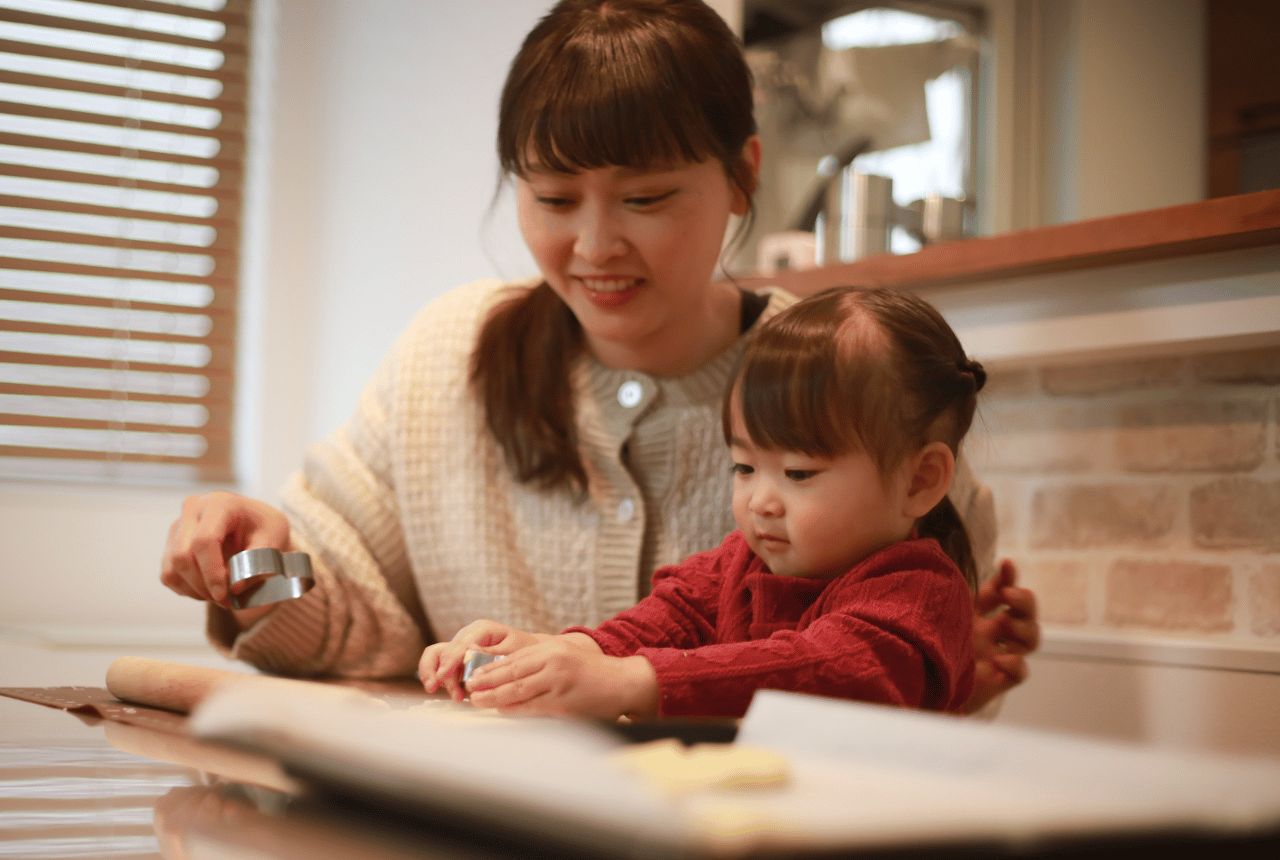
Behavior is communication. When you use guidance strategies rooted in development (instead of reaction or punishment), children learn responsibility—and days feel calmer and more connected.
Each of these changes is small on its own. Together, they create a foundation that replaces chaos with confidence.
What Happens If the Chaos Continues
When days stay reactive for too long, everyone feels it. Children become more dysregulated. Parents become more frustrated. Learning starts to feel like a battle instead of a joy.
Over time, chronic stress during early childhood learning can impact attention, emotional regulation, and a child’s relationship with learning itself. And for parents, burnout often leads to inconsistency—which only fuels more chaos.
Research consistently shows that predictable routines and responsive guidance support emotional regulation and learning readiness in young children. Studies published by the Center on the Developing Child at Harvard University highlight that consistent, supportive environments help reduce stress responses and build lifelong learning skills.
In other words: calm isn’t a “nice-to-have.” It’s foundational.
Get Support Without Doing It Alone
You don’t have to figure out calm, respectful behavior through trial and error. And you don’t have to rely on constant reminders, corrections, or power struggles to get through the day.
One of the simplest ways preschool teachers create calmer classrooms is by making expectations visible, shared, and consistent—so children know what “kind” and “respectful” actually look like in everyday moments.
Free Resource 🌱
Thank you for reading this content. And if you loved this post, please be sure to join our Parent Advisor Facebook group where we share more insights and community.
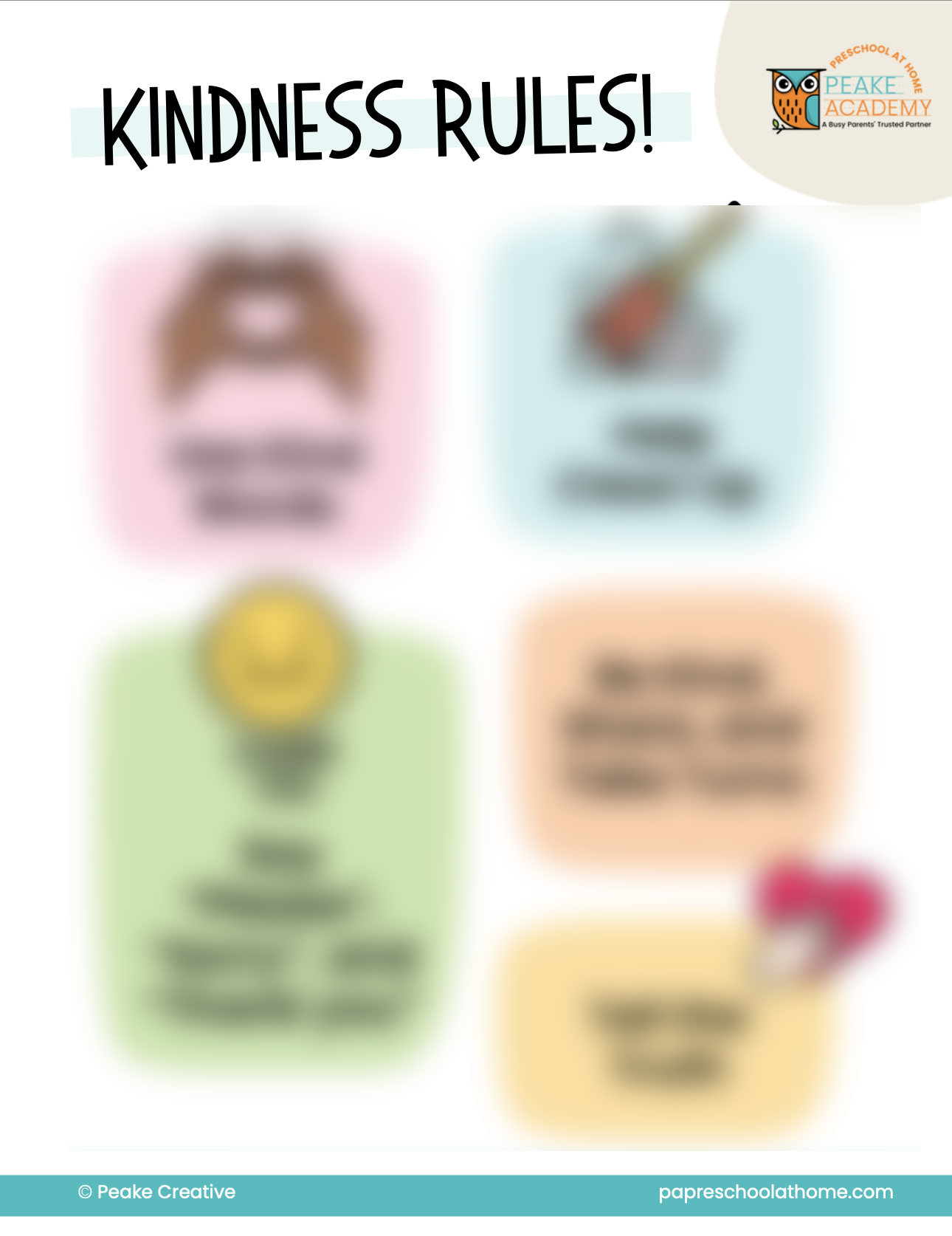
If you want to start small, we’ve created a free Kindness Rules printable you can use right away. It’s a child-friendly visual that helps set clear expectations around things like using kind words, helping clean up, telling the truth, and taking turns—without lectures or repeated reminders. Post it in your learning space, refer to it during the day, and let it do some of the work with you.
And if you’re ready for deeper support—routines, guidance strategies, planning tools, and real teacher-backed systems—Teacher Partner Essentials was created to walk alongside you. It gives you the structure and confidence to guide behavior, learning, and daily rhythms with calm instead of chaos.
You’re not meant to do preschool alone.
🌱 With the right tools and support, calm really is possible—one small reset at a time.

Preschool-At-Home Teacher Partner Essentials
A comprehensive, printable guide crafted by seasoned early childhood experts. This kit is designed to empower you, the Chaos Coordinator, with all the tools and resources you need to deliver a uniquely engaging educational experience in any setting.
Visit our Parent Advisor and The Buzz Blogs to learn more about related topics and parenting tips. You are welcome to join our private Parent Advisor Facebook group. It’s a growing community of parents and preschool teachers where you can learn and share more parenting tips.