
Positive Behavior Strategies That Turn Back-to-School Stress Into Connection
Every experienced educator knows the feeling. A classroom that ran smoothly all summer suddenly feels unpredictable again come August. New routines, new expectations, and a room full of children still adjusting to structure all combine into a recipe for more frequent meltdowns and harder transitions. The teams who navigate this season best aren't the ones who never see challenging behavior. They're the ones who know how to meet it with a plan.
Meltdowns Are Communication, Not Defiance
It's easy to interpret a tantrum as a child testing limits or refusing to cooperate. In reality, most challenging behavior during a transition period is a child's way of communicating something they don't yet have the words for. Overwhelm. Uncertainty. A need for control in a season that feels newly out of their hands.
Shifting the lens from "defiance" to "communication" changes everything about how a team responds. Instead of asking, "How do I stop this behavior?" the more useful question becomes, "What is this behavior telling me?"

Watch for the Cue Before the Blow-Up
Nearly every meltdown has a small, physical signal right before it escalates. A clenched fist. A change in breathing. A word repeated twice, louder each time. Training your team to notice these cues creates an opportunity to step in before frustration boils over entirely.
This takes practice. It means slowing down enough to actually watch for these signals in the middle of a busy classroom day. But once a team learns to spot them, redirecting a child becomes far easier, and far less disruptive to the rest of the room.

Build Predictable Transition Routines
Many of the behavior challenges that show up in late summer aren't really about behavior at all. They're about transitions, the moments between activities where structure momentarily disappears. A consistent transition routine, the same song, the same countdown, the same visual cue, gives children a predictable bridge between one activity and the next, reducing the uncertainty that often triggers frustration.

Give Children Language for Big Feelings
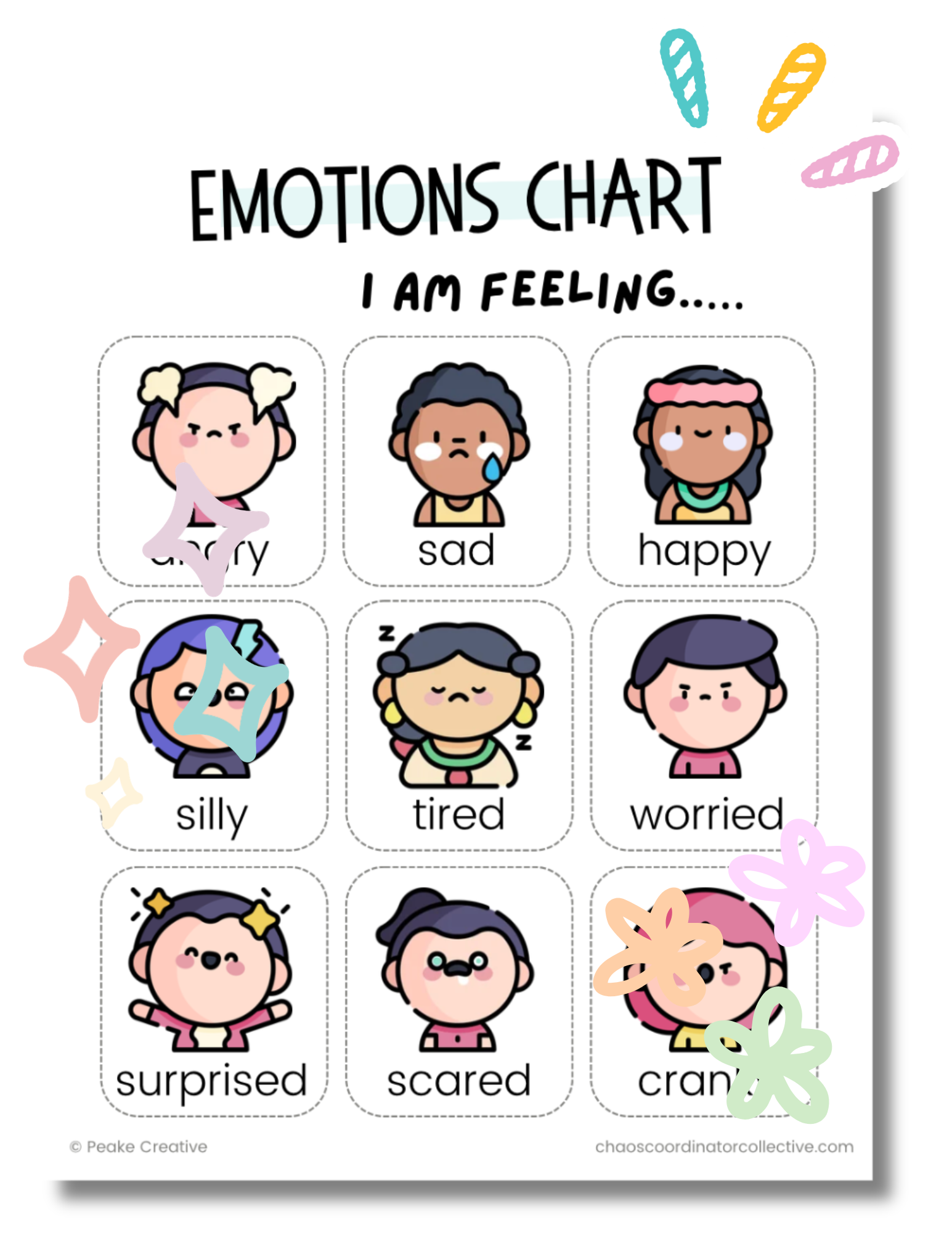
Just as adults need words to process what they're feeling, children need the same tools, often more than we assume they do. Simple emotion vocabulary, paired with visual supports like an emotions chart, helps children name what's happening inside them before it turns into a full-blown meltdown. A child who can point to "frustrated" on a chart has a tool that a child without that language simply doesn't have.

Turn Stress Into a Connection
The real shift happens when a team stops viewing challenging behavior as something to manage and starts viewing it as an opportunity to connect. A child who melts down and is met with calm, curious attention, rather than frustration, learns something powerful: that big feelings don't damage the relationship. That lesson builds trust far faster than any consequence ever could.
Practical Tools for the Season Ahead
Positive behavior strategies work best when they're built into a plan, not improvised in the moment. Our Behavior Management Workbook gives your team practical, proactive tools for exactly this kind of season, from spotting early cues to building predictable transitions that keep stress from spiraling.
Your Next Step
🧡 Curious what's driving the behavior you're seeing? Download your free Emotions Chart below and give the children in your care a simple way to name what they're feeling.
🧡 Turn insight into a plan with the Behavior Management Workbook. Get proactive strategies that help you build connection before stress ever has the chance to take over. Learn more here.
Visit our Preschool Advisor and The Buzz Blogs to learn more about related topics, parenting, and educator tips. You are welcome to join our private Preschool Advisor Facebook group. It’s a growing community of parents and preschool teachers where you can learn and share more parenting tips.